Isti’dad · استعداد · readiness
When the time comes, they will know what to do.
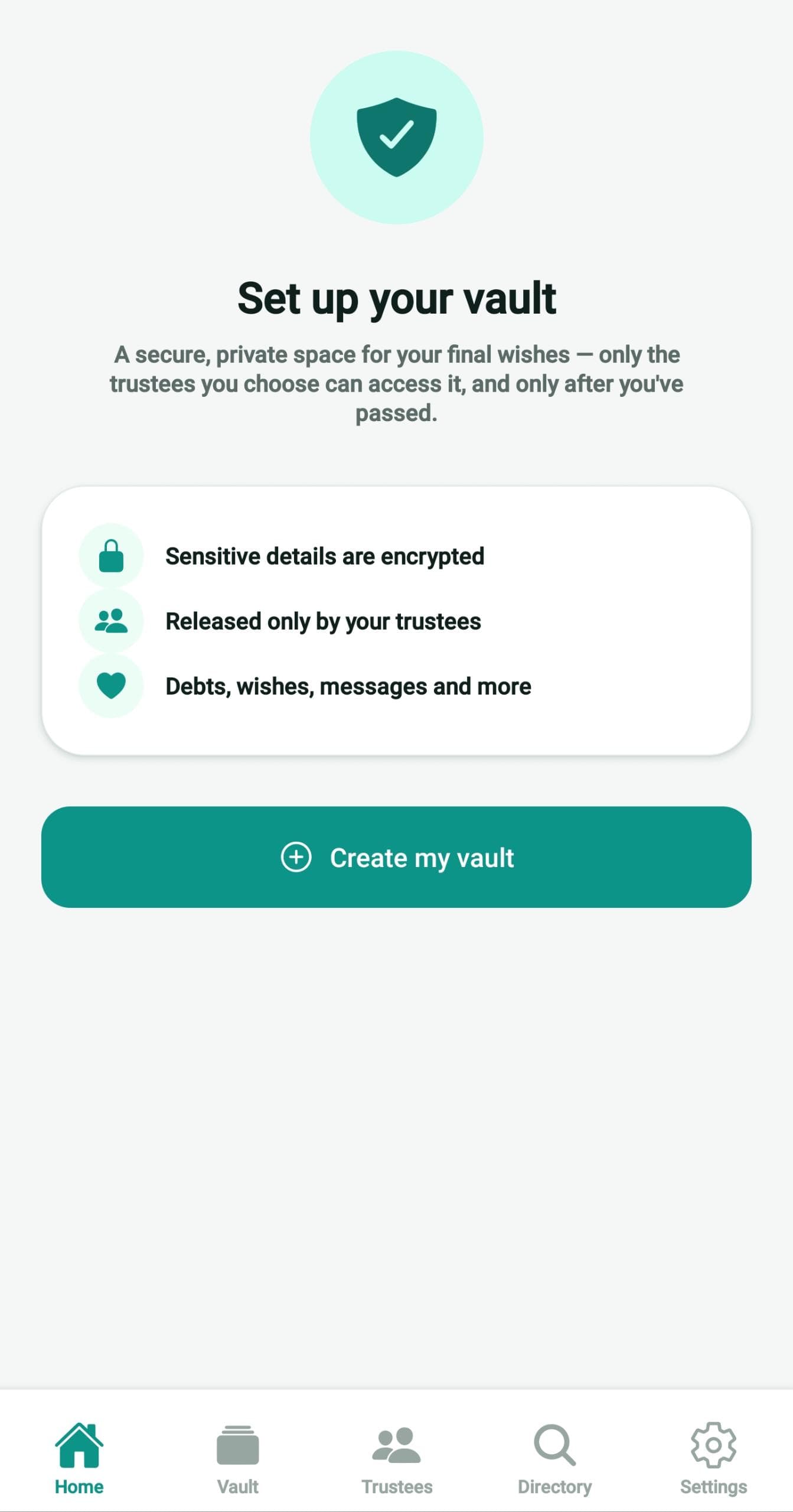
Record your debts, bequests, guardianship wishes and funeral instructions in one private place, and appoint the trustees who will carry them out. Nothing is shared while you are alive.
Or create your account on the web and sign in on your phone when you are ready.
Free to use. Your records stay yours.
“It is not right for any Muslim who has something to bequeath to spend two nights without having his will written down with him.”
What you can write down
Start with one thing you have been meaning to record. Add the rest whenever you are ready — nothing has to be finished for it to be useful.
Debts, both ways
What you owe and what you are owed, with names, amounts and notes. The first thing that must be settled from an estate, and the thing families most often never learn about.
Bequests and the third
Record your wasiyyah and see it measured against your estate, so you know whether you are inside the third that is yours to give.
Missed prayers, fasts and zakat
The obligations you intend to make up, or would want made up on your behalf.
Guardianship
Who you want to raise your children, and why — in your own words, written while you can still explain yourself.
Funeral and burial wishes
Ghusl, janazah, burial place, who to call first. Decisions your family would otherwise make in the first few hours of grief.
Final messages
Letters, recordings and duas for the people you are leaving behind.
Plus sadaqah jariyah, digital assets, important documents, the people to notify, and duas you want read.
Built to be opened on an ordinary evening
Not a form to be endured. Every section stands on its own, so you can put down five minutes of work and come back in a month.
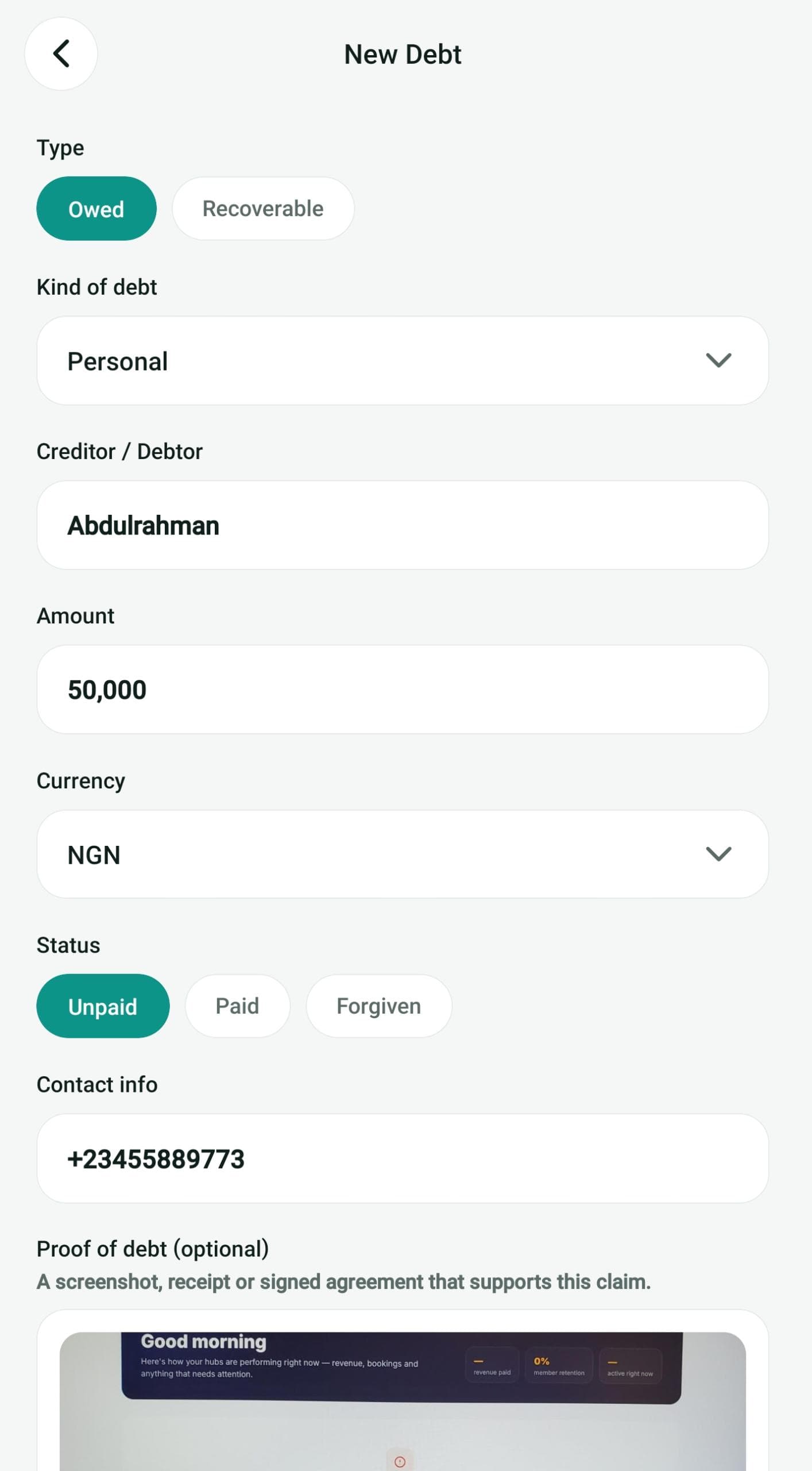
Debts, both ways
What you owe and what you are owed, with names and amounts.
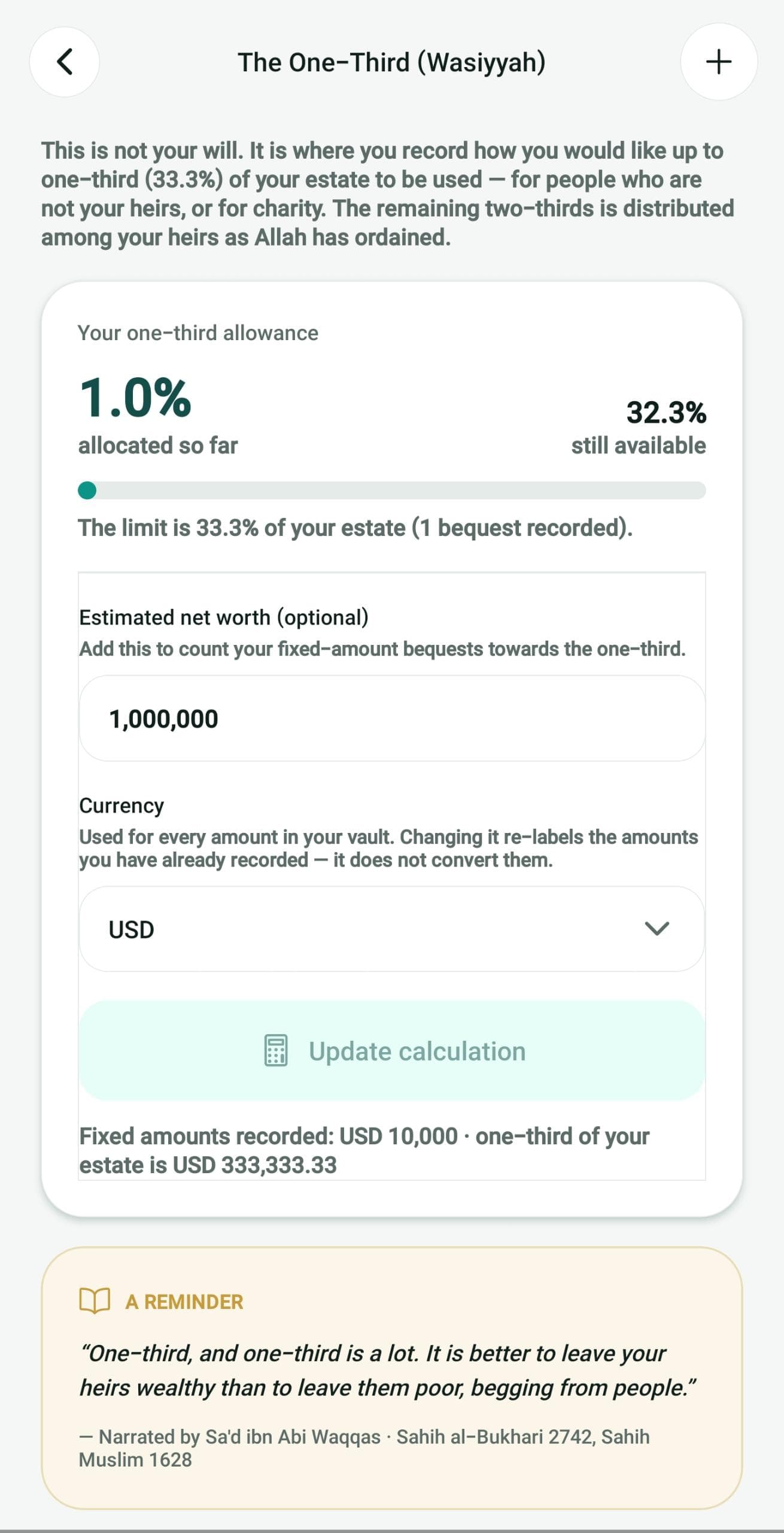
Bequests against the third
Your wasiyyah, measured against your estate as you enter it.
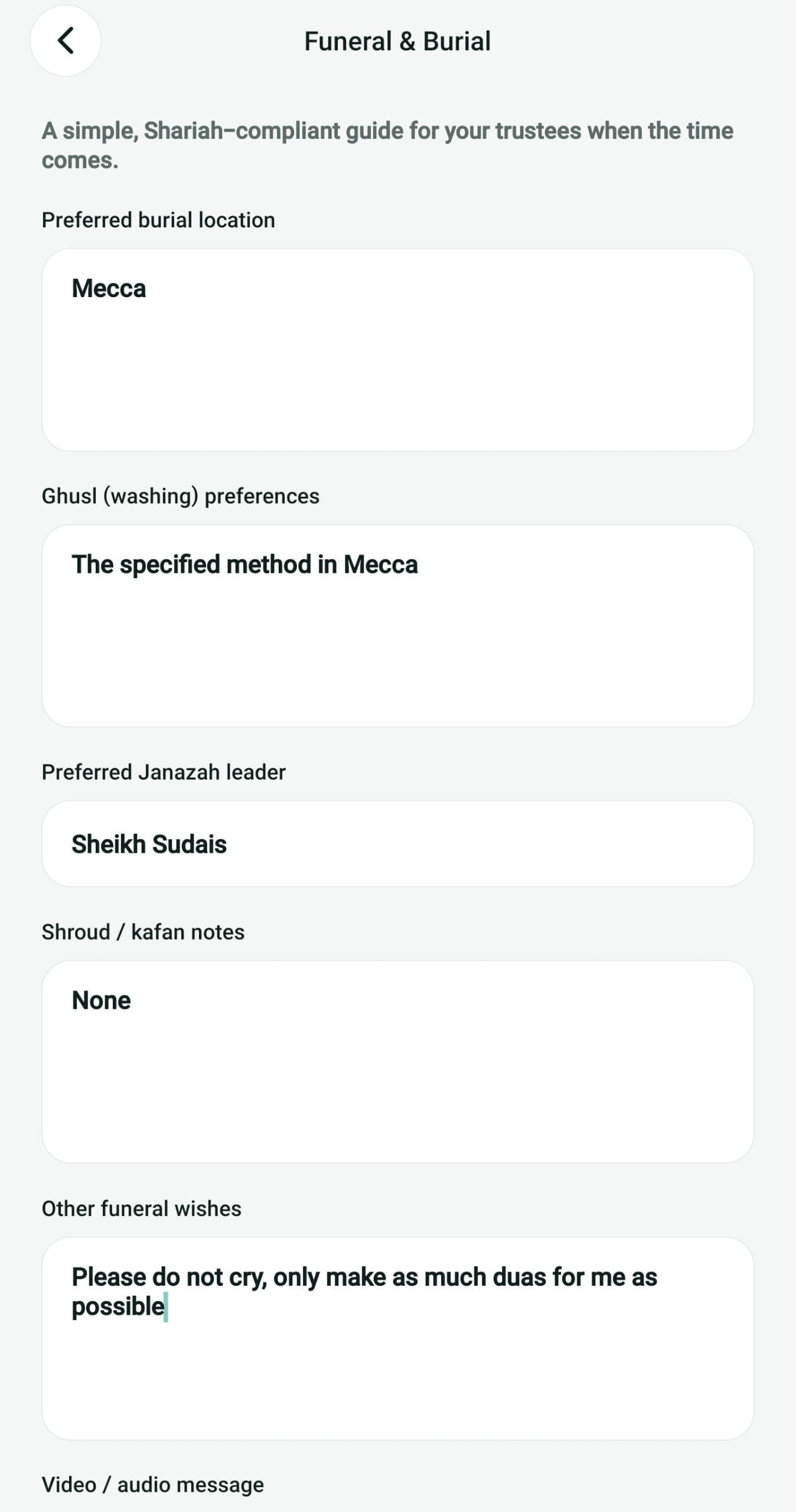
Funeral and burial wishes
Ghusl, janazah, where you want to be buried, who to call first.
The release protocol
What stops anyone opening it while you are alive
This is the question everybody asks, and it deserves a straight answer.
You write it down
Everything sensitive is encrypted before it is stored. Nothing is shared while you are alive — not with your family, not with your trustees, not with us.
You appoint trustees
Two or more people you trust. They can see nothing at all until the moment described below, and you can change who they are whenever you like.
A trustee reports your passing — with evidence
Not an inactive switch. Being away from your phone does nothing at all. A trustee has to actively report it, and a multi-step verification with the trustees will be carried out before the vault is opened.
We do send occasional reminders to review your records, and if several go unanswered we will ask your trustees to check that you are well — a phone call, nothing more. A reminder can never open a vault. More in the FAQ.
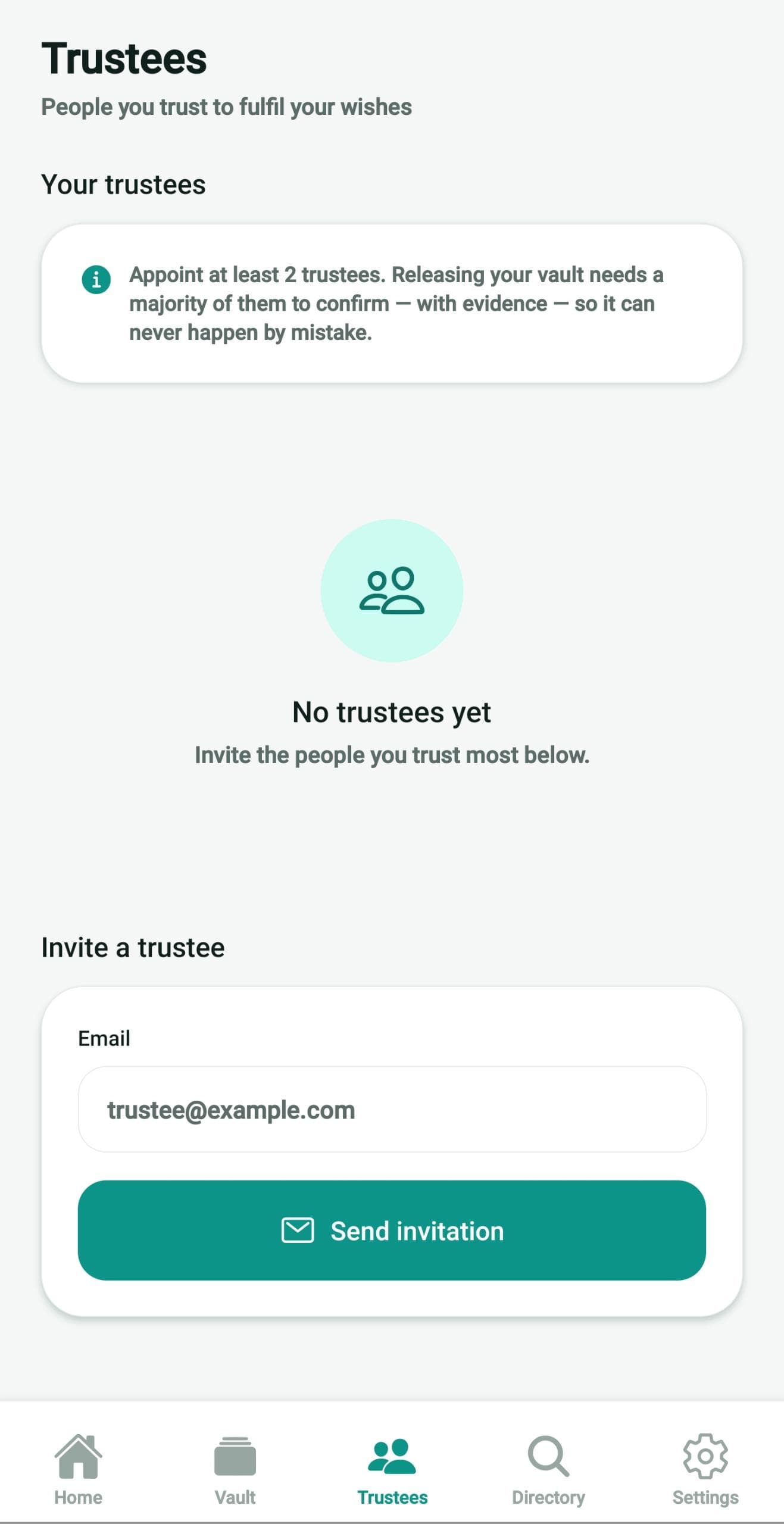
Your trustees, and where each of them stands. They see nothing of your records until enough of them confirm your passing.
Your vault stays yours
Everything sensitive you record is encrypted before it is stored. Nobody here reads your vault — there is no screen anywhere in our tools that shows the contents of one. We can see how many sections you have filled in, and never a line of what is in them.
You can export everything as a PDF at any time — built on your own device, so a printed copy never passes through us. And you can delete your account and every record in it whenever you want.
Read the privacy policy for the whole of it.
Start with one thing
A debt you have been meaning to record. A name. Where you want to be buried. It does not have to be finished to be worth having.